
Digital Asset’s Regulatory Leap: A Strong Signal for the Future


Jannick Bröring
Spotlight
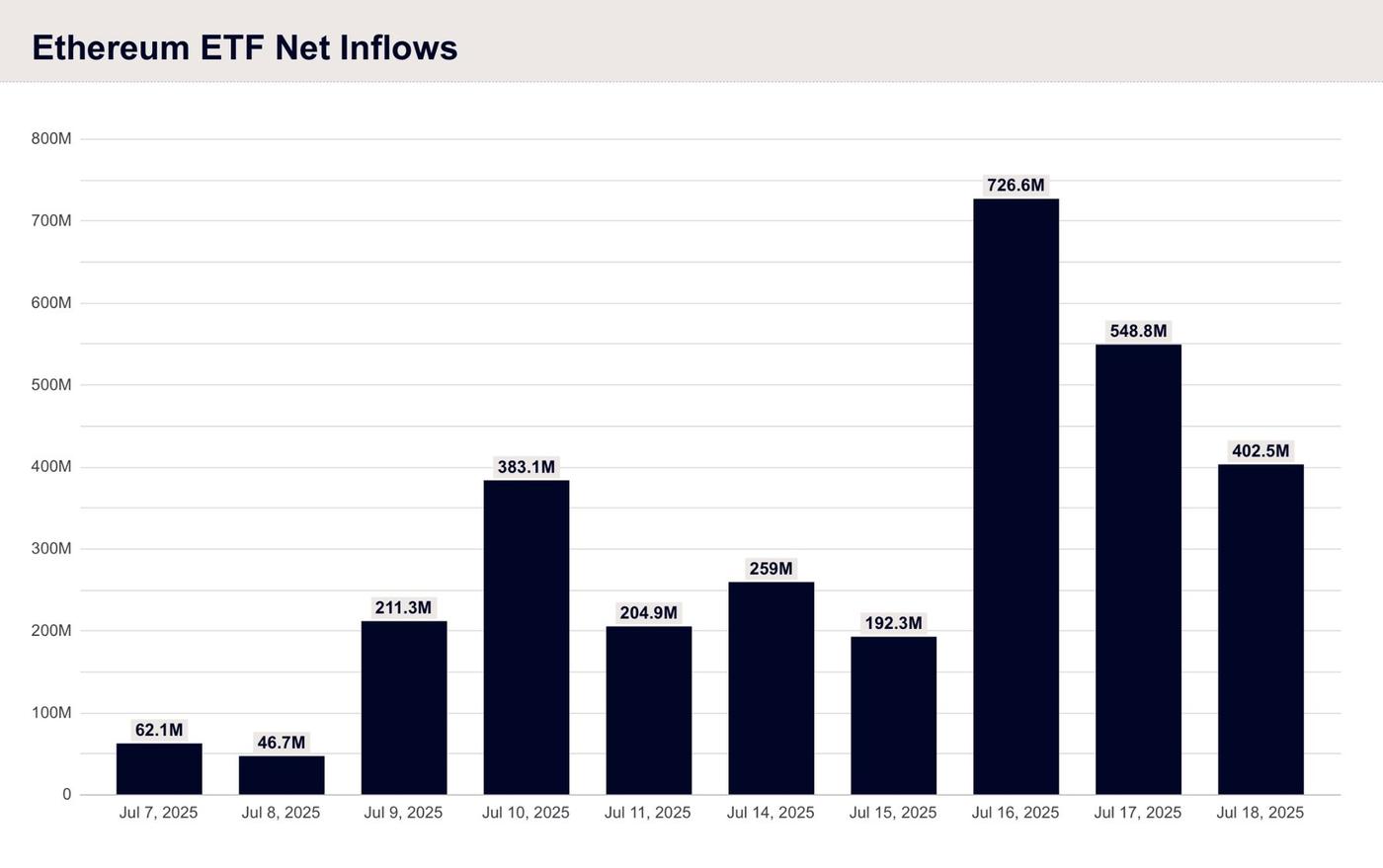
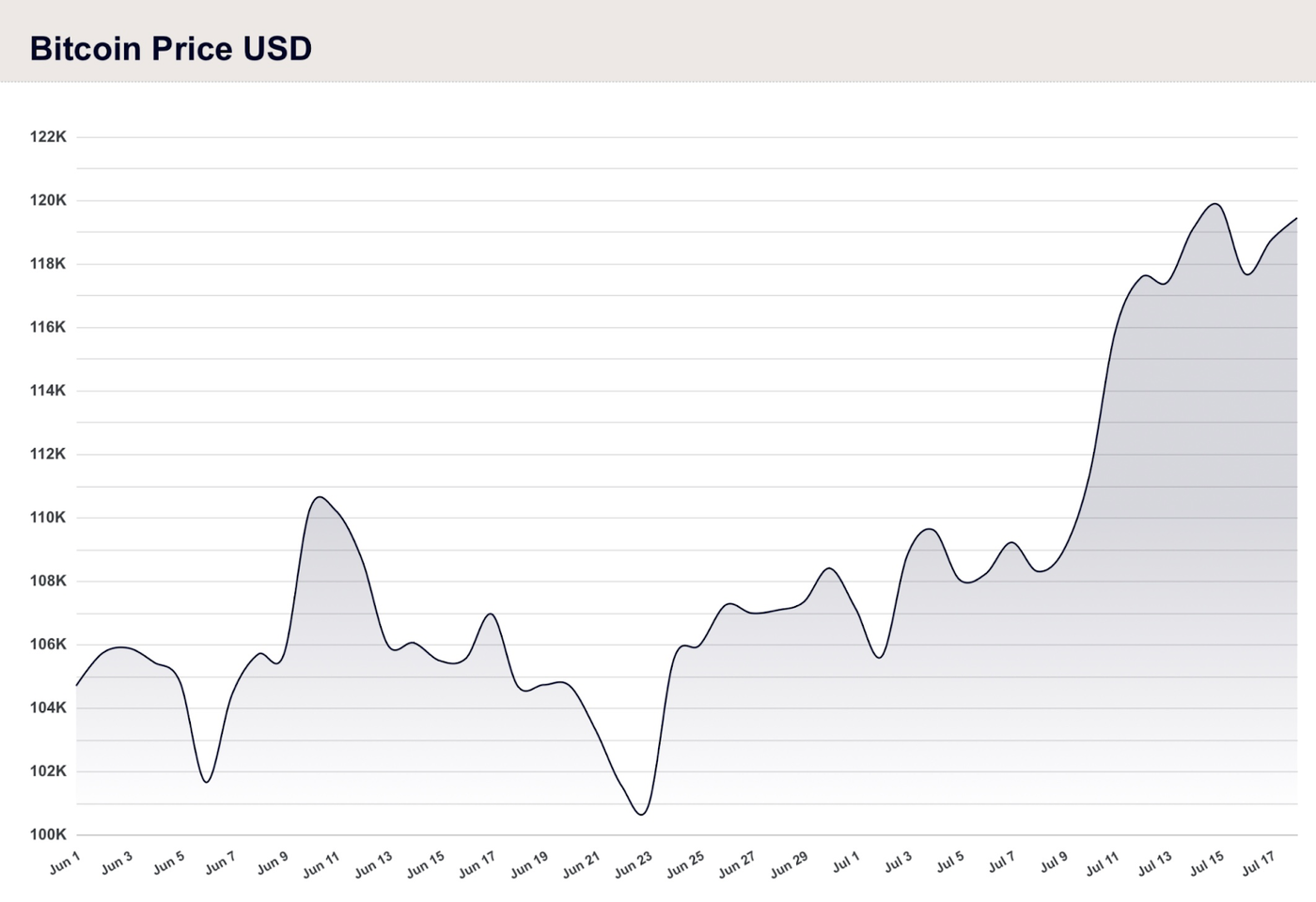
The digital asset market saw a nuanced performance this past week, even as major legislative strides unfolded in the U.S. Notably, the total market capitalization of digital assets surpassed the $4 trillion mark for the first time—an important financial milestone that underscores the sector’s growing relevance in global markets. While Bitcoin's price held steady after its recent all-time high, the focus shifted to Ethereum (ETH), which surged impressively above $3,700, driven by record net inflows into its ETFs. This highlights growing confidence in the broader digital asset ecosystem, especially for platforms offering strong utility.
It was also a pivotal "Crypto Week" in Washington. The GENIUS Act, a landmark piece of legislation designed to regulate stablecoins, successfully cleared both chambers of Congress. The bill, which was on President Trump's desk, was approved by him last Friday 18th, leading to significant celebration in the digital asset market as it marks the first federal law on the subject.Beyond the GENIUS Act, the House also passed the CLARITY Act, which aims to classify digital assets as either securities or commodities, and the Anti-CBDC Surveillance State Act, prohibiting the Federal Reserve from issuing a CBDC without Congressional approval. Both of these bills now await their fate in the Senate. These legislative advancements, particularly the recently enacted stablecoin regulation, underscore a maturing market where structured investments and clear frameworks are increasingly shaping the future of digital assets within mainstream finance.